Monday 9th to Sunday 15th February 2026
I've mentioned that the Earth is tilted on its axis by 23.5 degrees before and this is what causes the seasons. Well the gas giant Saturn also has a similar tilt. This means that over a period of around 15 years, its famous rings of dust go from being nicely positioned for observation at an angle to being edge-on to us and difficult to see.
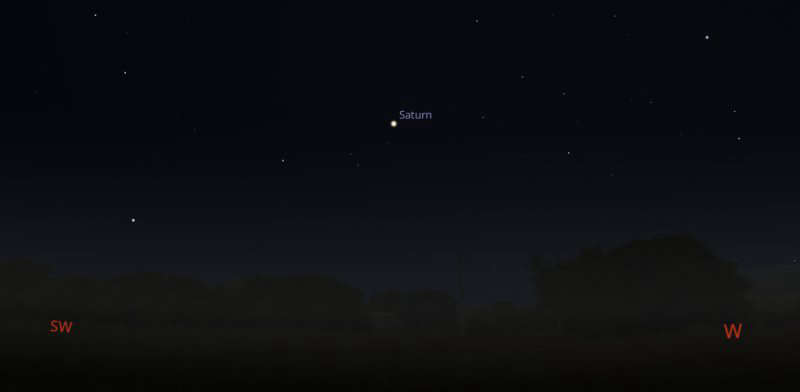
Saturn's tilt now means that you will no longer be able to see its largest moon Titan pass across the planet's surface. If you aim your telescope towards the west south west around
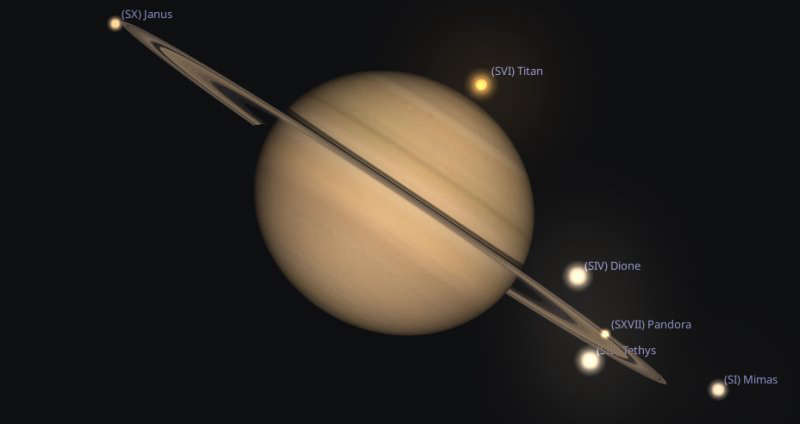
While you have that telescope out of the cupboard, point it a little above and to the right of Saturn to try and find
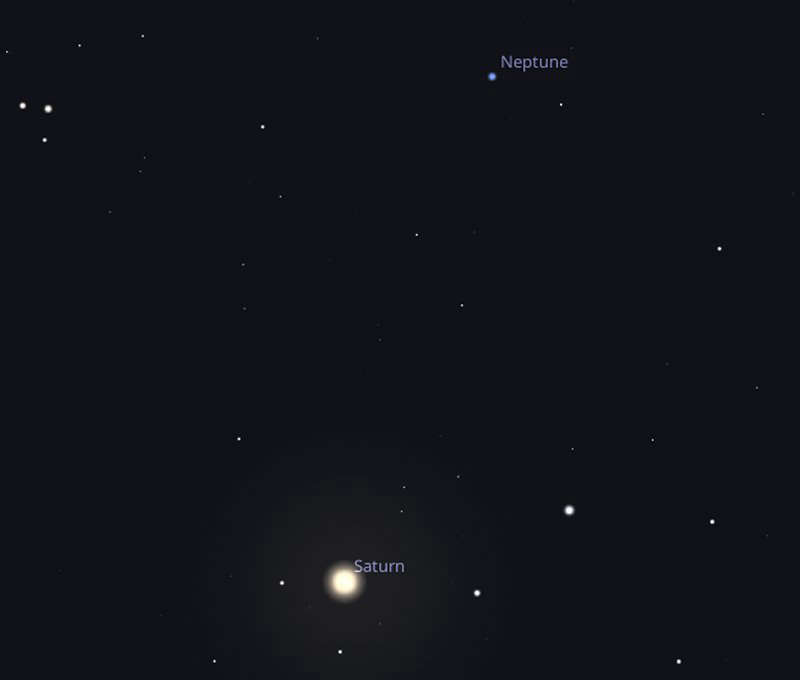
Remember that the magnitude scale works backwards, so the more positive the number is, the fainter the object. You can see down to a magnitude of around +6.0 with the Mk1 eyeball from a dark location. Anything dimmer than that requires binoculars or a telescope.
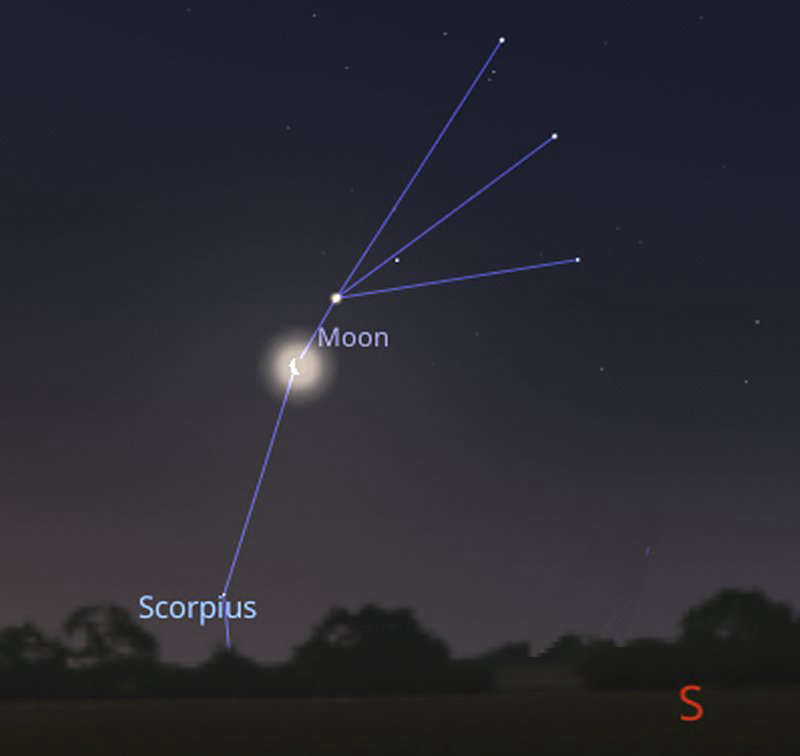
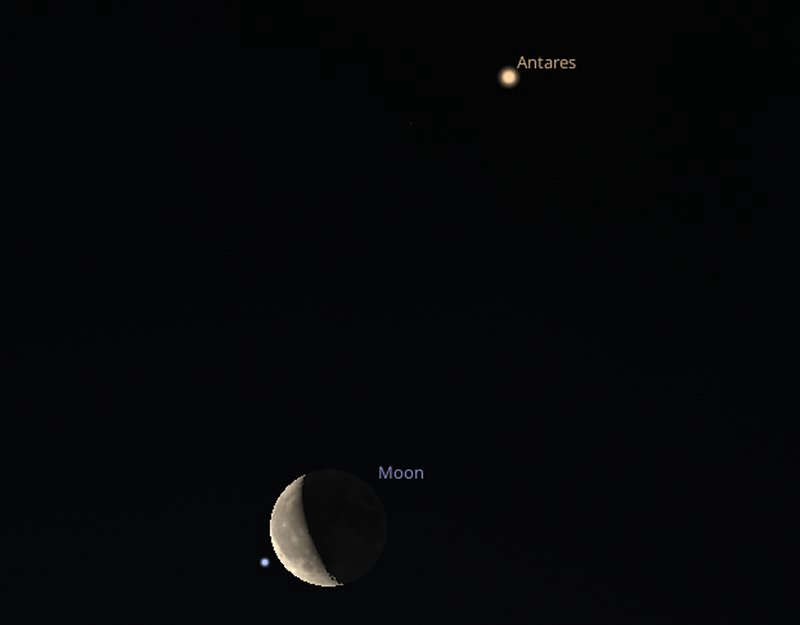
If you would prefer a morning activity, look towards the south at 6am on Wednesday 11th to see a 33%-lit waning crescent Moon occulting (or passing in front of) a magnitude +2.8 star in the constellation of Scorpius. At the same time, the bright red giant star Antares will be visible above the Moon, shining at a magnitude of +1.7
www.starsoversomerset.com
Screenshots courtesy of Stellarium
Copyright Adrian Dening and Radio Ninesprings 2026
 Yeovil Stroke Unit
 Boundary Changes
 Flooding
 False Fire Alarms
 Dog DNA
 Mobile Phones in Vehicles