
Monday 24th to Sunday 30th March 2025
At the beginning of next week, the Moon is conveniently below the horizon, so it's an ideal time to go looking for those faint deep sky objects, as there will be no light pollution from it. One good target would be the planetary nebula known as Messier 97 - the Owl Nebula.
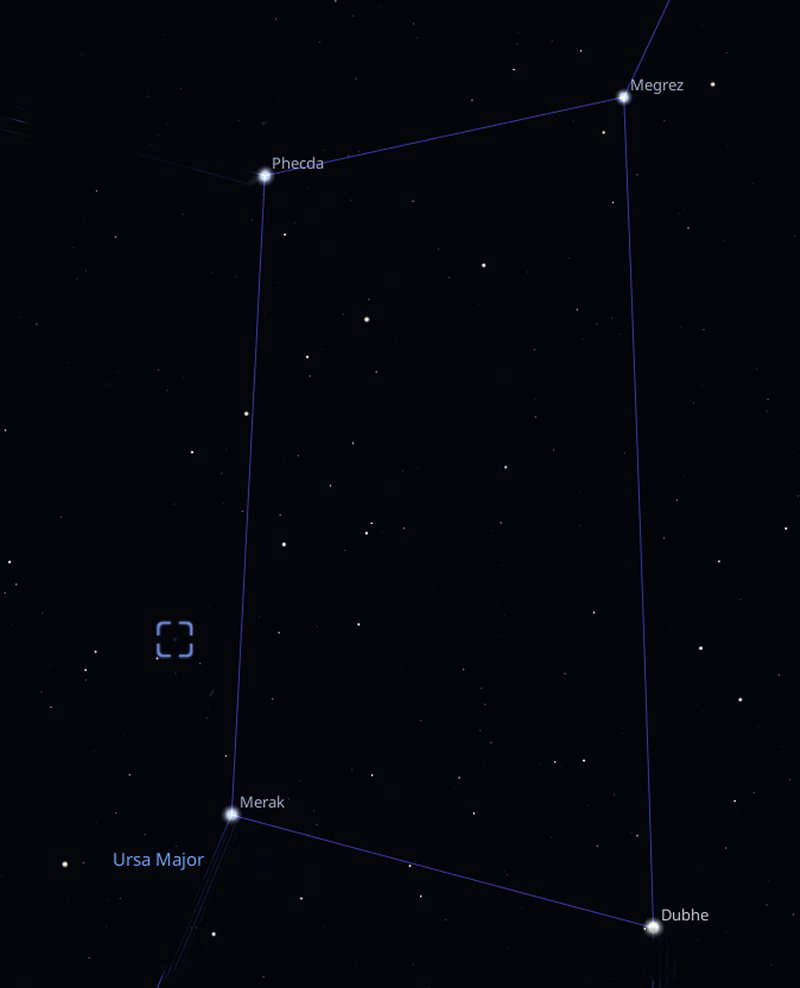
First you need to locate the constellation of Ursa Major, that resembles a saucepan. Around
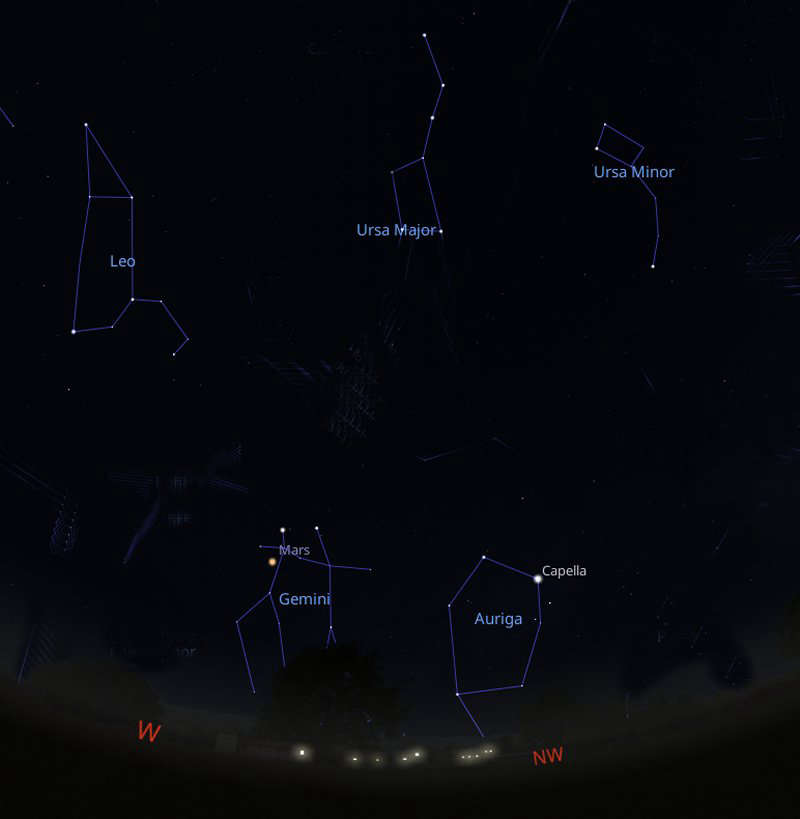
M97 can be found a little above the beta star "Merak" of Ursa Major.
M97 has a magnitude of around +9.9 so you will definitely need a telescope. A small telescope will show a fuzzy disc, but a larger telescope reveals two "holes" in the disc that resemble the eyes of an owl looking at you.....hence the name.
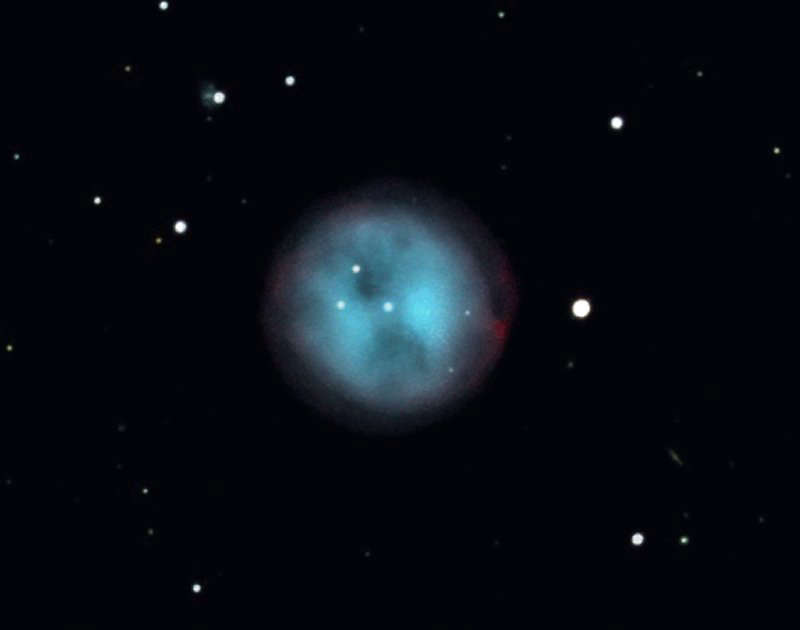
A large "emission nebula" like the Great Orion Nebula has active gas that gives off light and is where stars are born. A "planetary nebula" is NOT where planets are born, rather the gas left behind by a dying star! Early astronomers with basic telescopes used to think these nebulas were planets because they were small and round.....the name stuck!
Changing the subject, there is an excellent opportunity to spot the International Space Station during the early evening of Monday 24th. The ISS will appear in the west at
www.starsoversomerset.com
Screenshots courtesy of Stellarium
Copyright Adrian Dening and Radio Ninesprings 2025
 Win a year's free storage for a charity with Giant Storage
 Clean up our Countryside
 Car Free Route
 Dog DNA
 Church Bats
 False Fire Alarms
 Mobile Phones in Vehicles