

Monday 15th to Sunday 21st December 2025
Sunday 21st is the winter solstice, when the Sun reaches it's lowest point in the sky and the days are shortest. Look on the bright side - the days are gradually going to get longer now, by roughly 4 minutes each day as we head towards spring and summer.
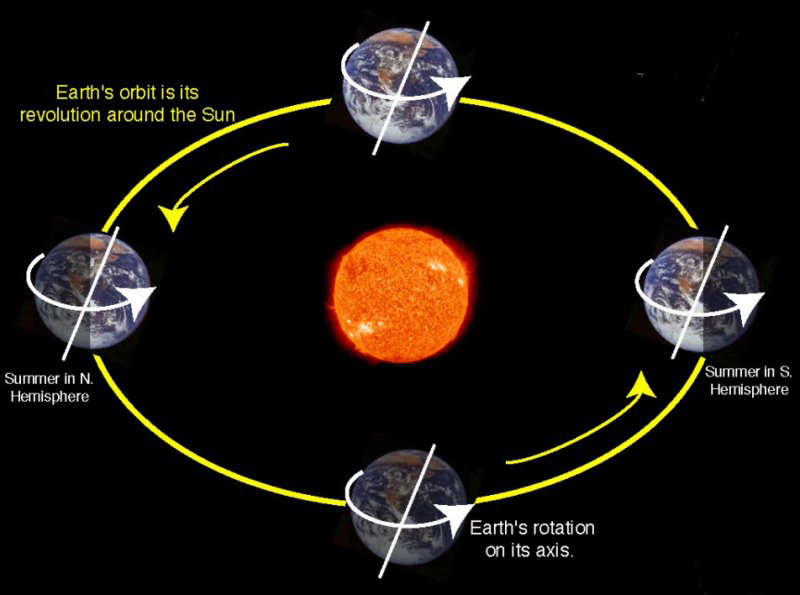
We have seasons because the Earth is tilted 23.5 degrees on its axis, so the north and south poles are not directly at the top and bottom. As a child, I always wondered why the Earth on the classroom globe was mounted wonkey!

Of course astronomers prefer the winter skies, because it is dark for longer and we can get outside with our telescopes more, but why by 4 minutes each day? The Earth's sidereal day, or the time taken for us to rotate once on our axis is NOT 24 hours. It actually takes 23 hours 56 minutes and 4 seconds. That's why, as we go through the different seasons, we progressively get lighter or darker each day by almost 4 minutes.
Things are kept simple in daily life, so we prefer to work on 24 hours, which divides up nicely into two lots of 12 hours on a clock face. Would you really like to read a clock chopped up into two halves of 23 hours 56 minutes and 4 seconds!
Our orbit around the Sun takes 365 1/4 days, but we work on a year being exactly 365 days. We make up the missing quarters every four years by adding an extra day to February and calling it a Leap Year.
The Earth spins at just over 1000 miles per hour and we travel around the Sun at a whopping 67,000 miles per hour, but you are unaware of it because you are ON the Earth, just like inside a car, you are not aware of the speed it is going.
www.starsoversomerset.com
Screenshots courtesy of Stellarium
Copyright Adrian Dening and Radio Ninesprings 2025
 False Fire Alarms
 Dog DNA
 Mobile Phones in Vehicles
 Car Free Route
 Clean up our Countryside
 Church Bats