
Monday 12th to Sunday 18th January 2026
We always see the same face of the Moon pointing towards us, as the time it takes our natural satellite to orbit around the Earth is exactly the same as its period of rotation. We never see the "dark side of the Moon", however the Moon does exhibit a phenomenon known as "libration", which in plain English means that it slowly wobbles a bit during its orbit!
At the beginning of the coming week, its libration makes features towards the Moon's
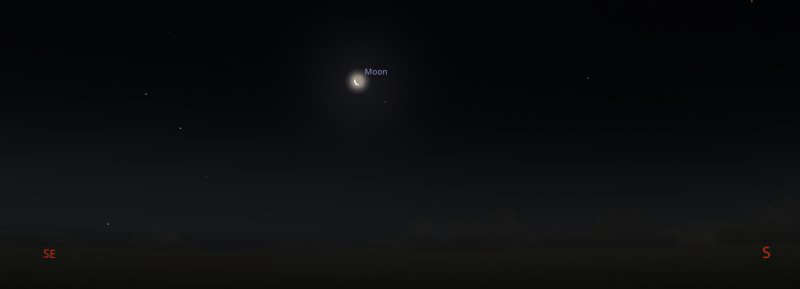
Remember that the different phases of the Moon are said to be "waxing" as it heads towards a Full Moon, when it is brightest and "waning" as it approaches a New Moon, when it is the dark side of the Moon pointing away from us that is illuminated by sunlight, so we can't actually see it.
The next New Moon occurs on Sunday 18th, so this would be an ideal opportunity to go hunting for those illusive faint deep sky objects with your telescope, as there will be no natural light pollution from our celestial neighbour to spoil the contrast.
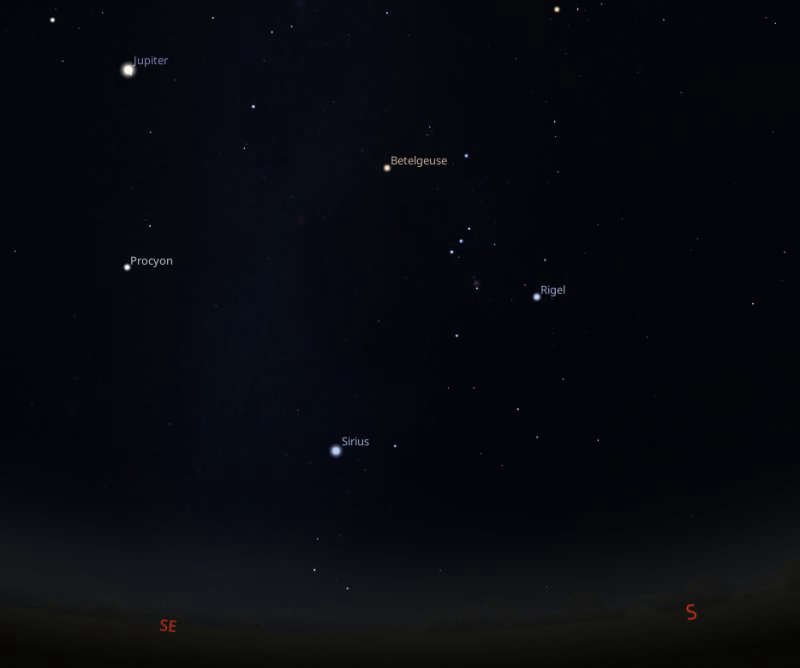
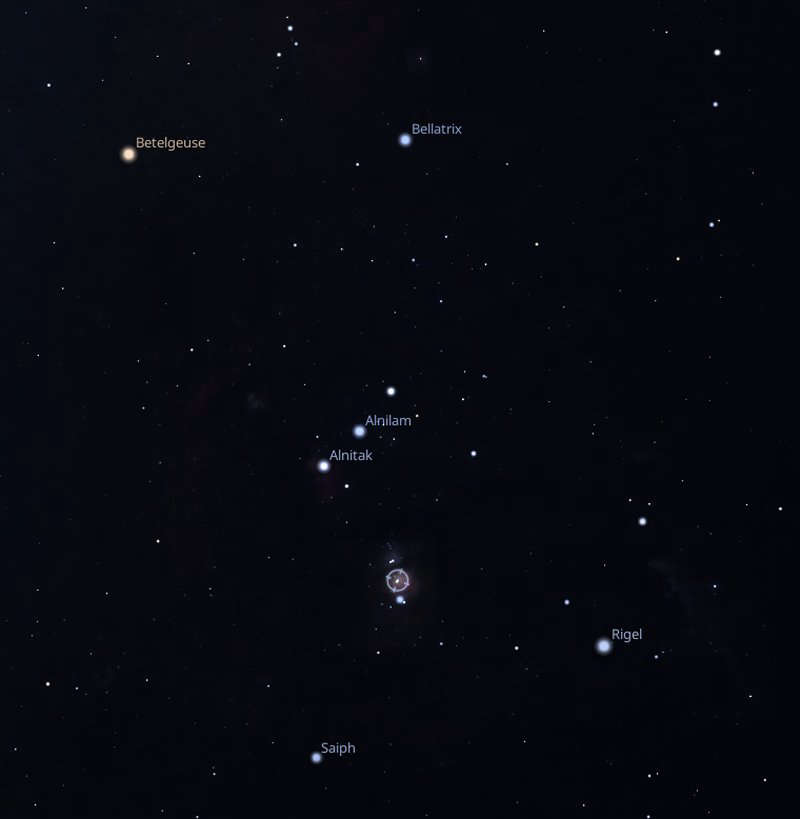
Of course some deep sky objects can even be seen with the naked eye and a good example is the Great Orion Nebula (Messier 42) in the "belt" of Orion. Around
www.starsoversomerset.com
Screenshots courtesy of Stellarium
Copyright Adrian Dening and Radio Ninesprings 2026
 False Fire Alarms
 Dog DNA
 Mobile Phones in Vehicles
 Car Free Route
 Clean up our Countryside
 Church Bats