
Monday 26th January to Sunday 1st February 2026
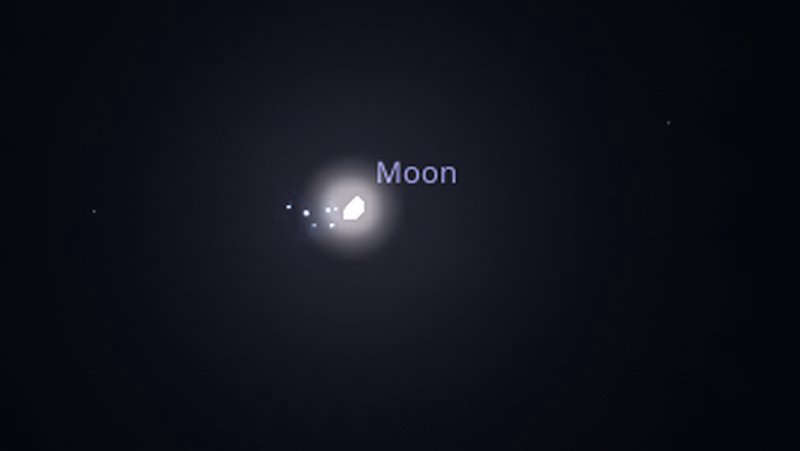
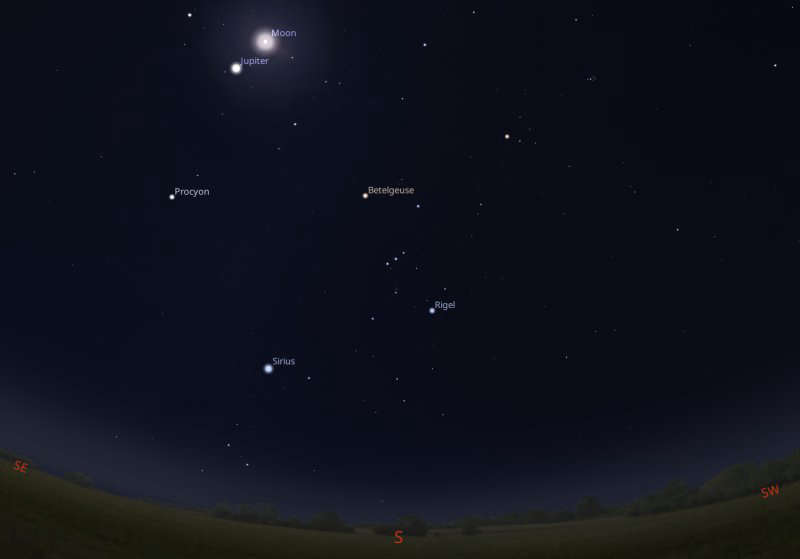
If you look towards the south west at 9pm on the evening of Tuesday 27th, a 68%-lit waxing gibbous Moon will appear to be passing in front of the Pleiades open cluster of stars. To the left of this event, the constellation of Orion with its bright stars Betelgeuse and Rigel will be easy to spot.
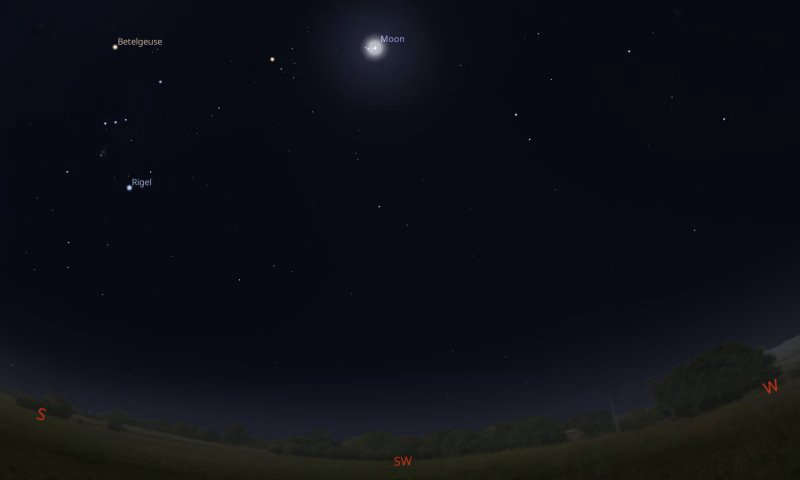
While you are looking in that direction, you can observe several more of the brightest stars in the night sky - Sirius, which is the brightest of all, Procyon and Capella. Even brighter, between Procyon and Capella, you will find Jupiter.
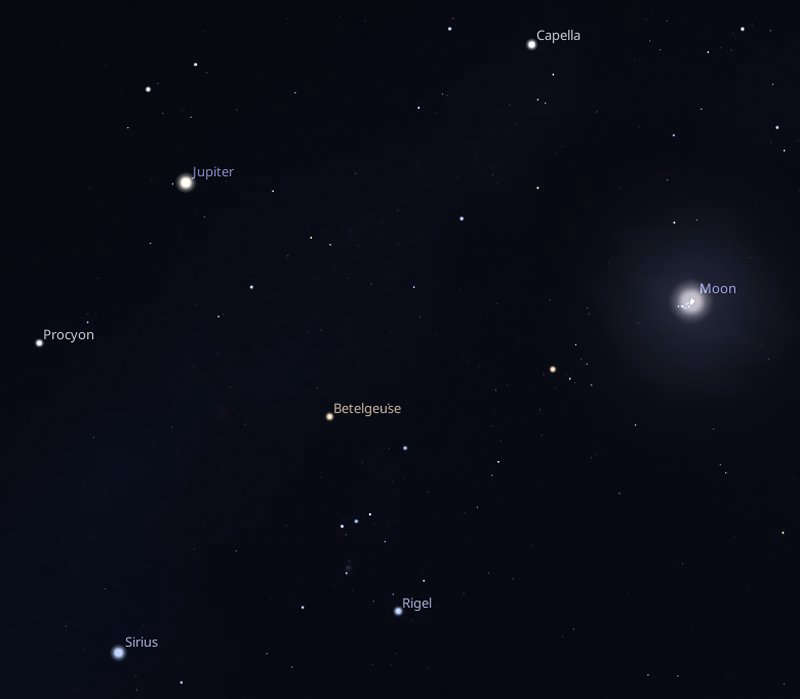
The enormous gas giant planets of our Solar System always look much brighter than the background stars, because they are relatively close to us and you see them because sunlight is reflecting off their surface. Stars are giving off their own light and that light is travelling much further to reach us. This is also why planets never seem to "twinkle" because the light is so much brighter, but the weaker light from stars is more-noticeably distorted as it travels through our atmosphere.
If you repeat your observations at
Planets like Venus, that are closer to the Sun than us exhibit phases too, but the outer planets like Jupiter will always appear as pinpoints of light.
www.starsoversomerset.com
Screenshots courtesy of Stellarium
Copyright Adrian Dening and Radio Ninesprings 2026
 False Fire Alarms
 Dog DNA
 Mobile Phones in Vehicles
 Car Free Route
 Clean up our Countryside