Monday 2nd to Sunday 8th February 2026
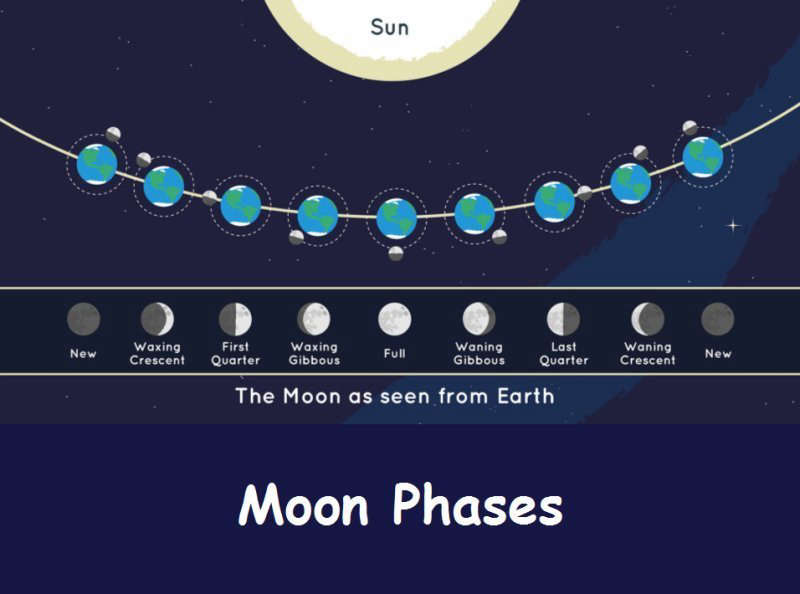
We will have had a Full Moon on Sunday 1st, so over the following couple of weeks, its different phases will be referred to as "waning" or becoming less bright as it heads towards a New Moon, when the side facing us is not illuminated by sunlight at all. By Tuesday 3rd, it will have become a 98%-lit gibbous shape.
If you look towards the east from around
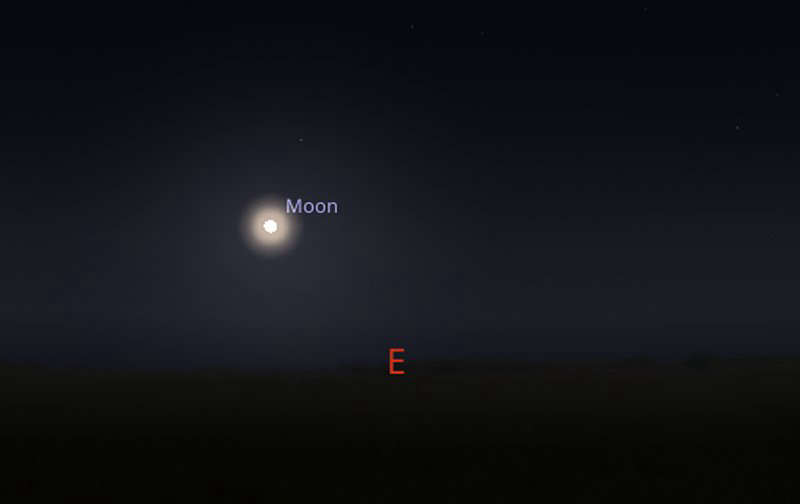
You will notice that if you concentrate on our celestial neighbour with the naked eye, it has a slightly bulbous shape and it is the left hand side of its surface that is illuminated by sunlight. The extreme right is in shadow.
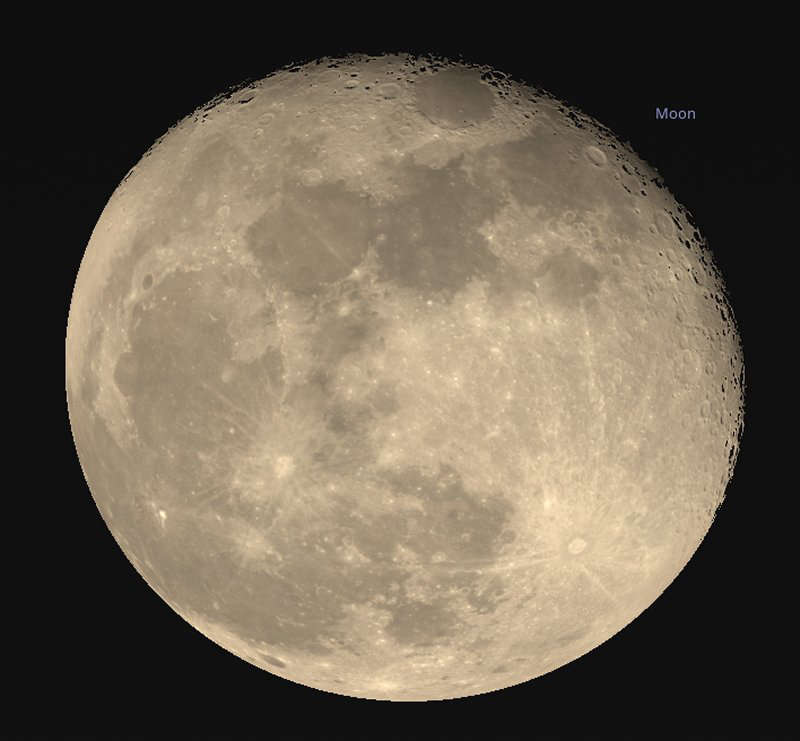
Whenever the Moon is waning, it is the left side that is visible. When the Moon is "waxing" or becoming brighter as it heads from a New Moon to a Full Moon, then it is always the right hand side that shows up. This effect is simply the result of the relative angles between us, the Moon and the Sun. It is more noticeable with say, a quarter or crescent Moon.
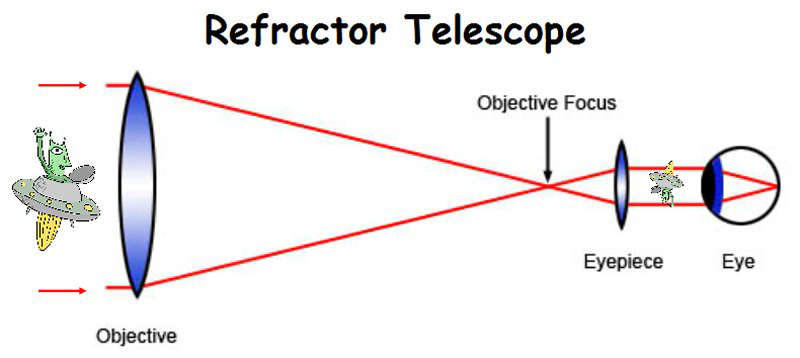
Now if instead you observe the Moon in a telescope, everything I have just said will be the other way around because of the way light passes through the telescope - everything becomes reversed, so up is down and left is right! Binoculars have an extra lens that corrects this because they are normally used to viewing terrestrial objects and your brain likes to see the sky at the top and ground at the bottom! For astronomical observing, it really doesn't matter if something appears upside-down!
www.starsoversomerset.com
Screenshots courtesy of Stellarium
Copyright Adrian Dening and Radio Ninesprings 2026
 False Fire Alarms
 Dog DNA
 Mobile Phones in Vehicles
 Car Free Route
 Clean up our Countryside
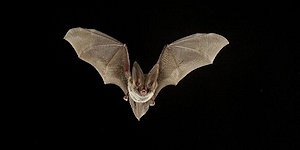 Church Bats