Monday 20th to Sunday 26th April 2026
Look towards the west around
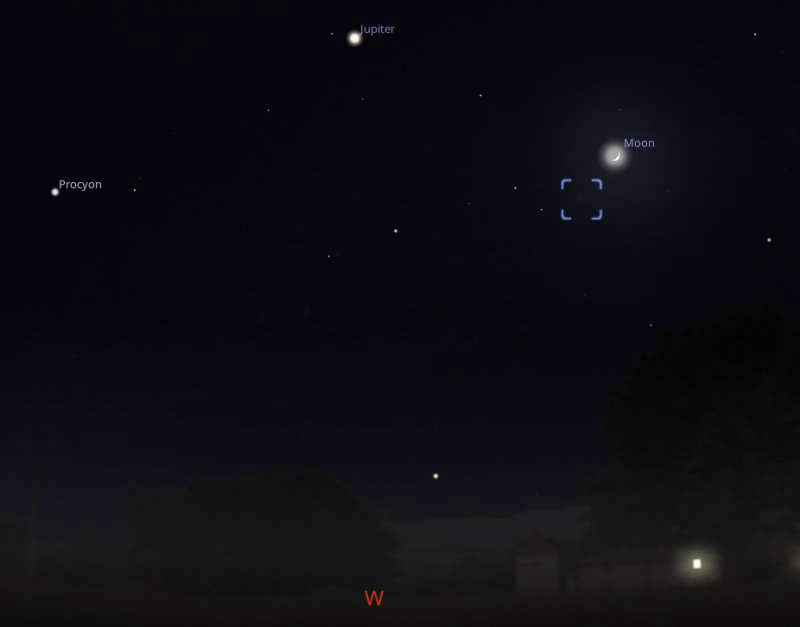
The cluster has a magnitude of +5.1 so in theory, it could be possible to just make it out with the naked eye from a dark location, but there will be a bit of light pollution from the Moon.
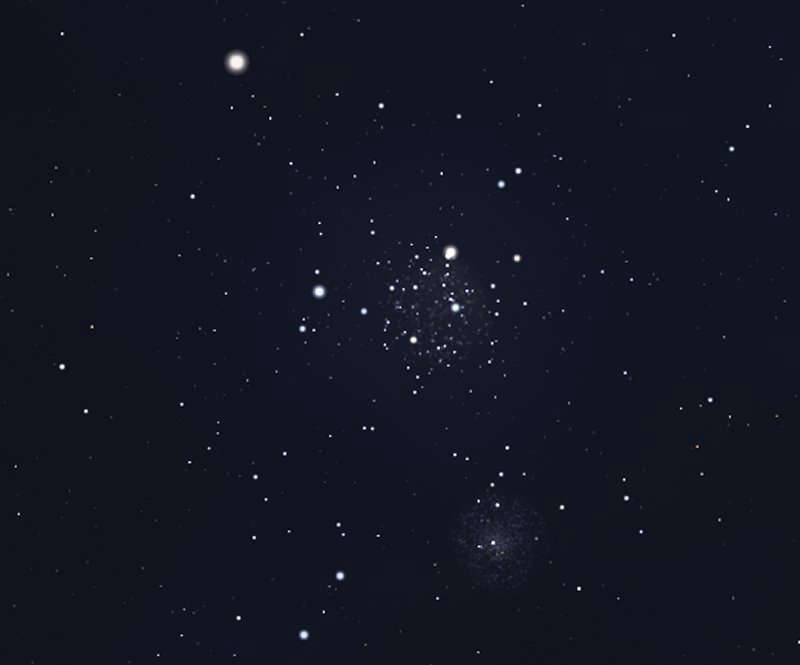
Maybe best to take your binoculars or a small telescope out with you and if you do this, you might also notice a faint fuzzy blob below the cluster - this is magnitude +8.6 NGC2158 which is another open cluster containing about 3000 stars 11,000 light years away from us.
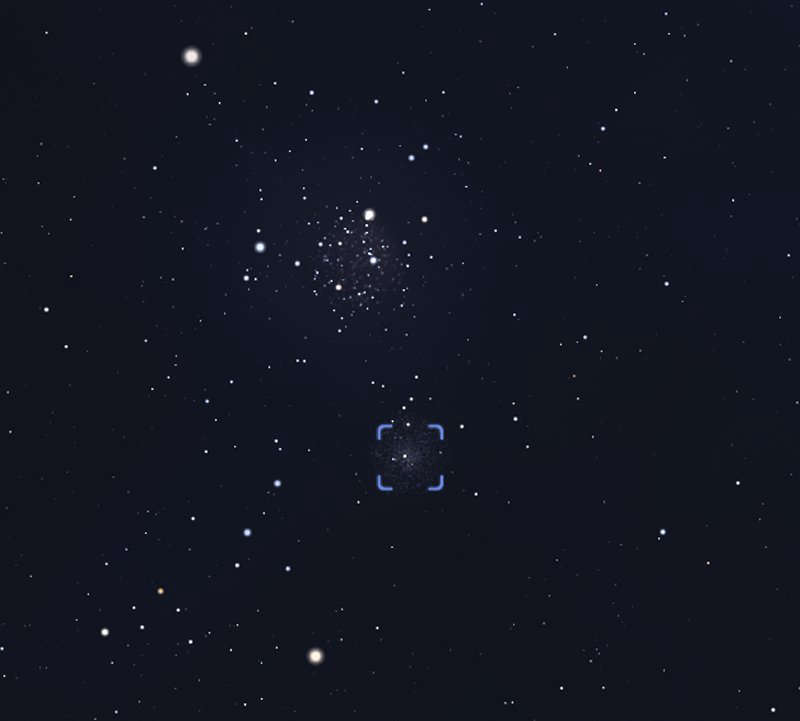
By contrast, M35 contains a similar number of stars, but it is only around 3000 light years away, so is brighter.
The catchy name of NGC2158 refers to the cluster's entry in the New General Catalogue. It doesn't have a Messier number because Charles Messier never spotted it!
The following evening, Wednesday 22nd, into the early hours of Thursday morning sees the peak of the annual Lyrids meteor shower. At 10pm, the constellation of Lyra will have risen about the north east horizon and the radiant point, where the shooting stars appear to originate from, is a little to the right of the constellation's brightest star, Vega.
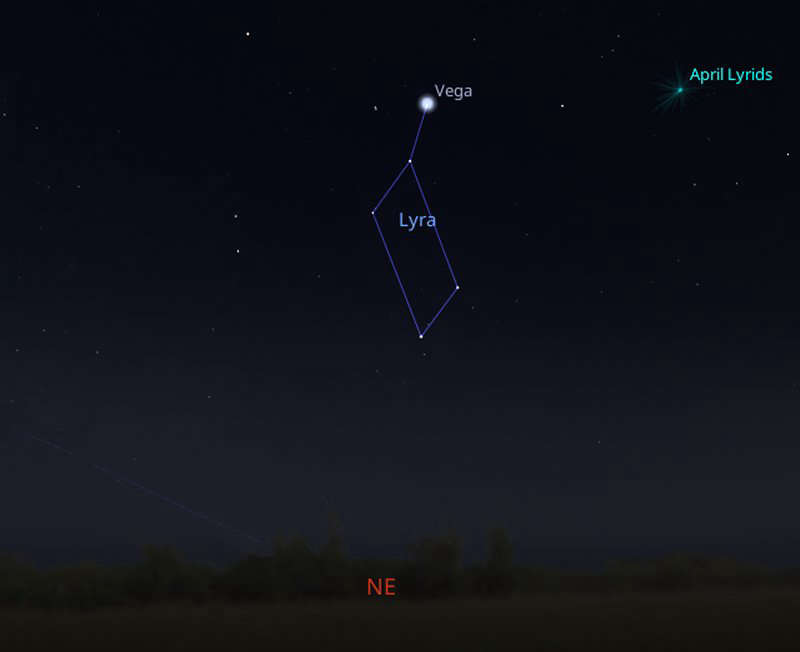
At its peak, the shower can produce around 18 meteors per hour. Fortunately, the Moon will be off to the west, in the opposite part of the sky, so the light from it won't spoil your view.
www.starsoversomerset.com
Screenshots courtesy of Stellarium
Copyright Adrian Dening and Radio Ninesprings 2026
 Clean up our Countryside
 Car Free Route
 Dog DNA
 Church Bats
 False Fire Alarms
 Mobile Phones in Vehicles